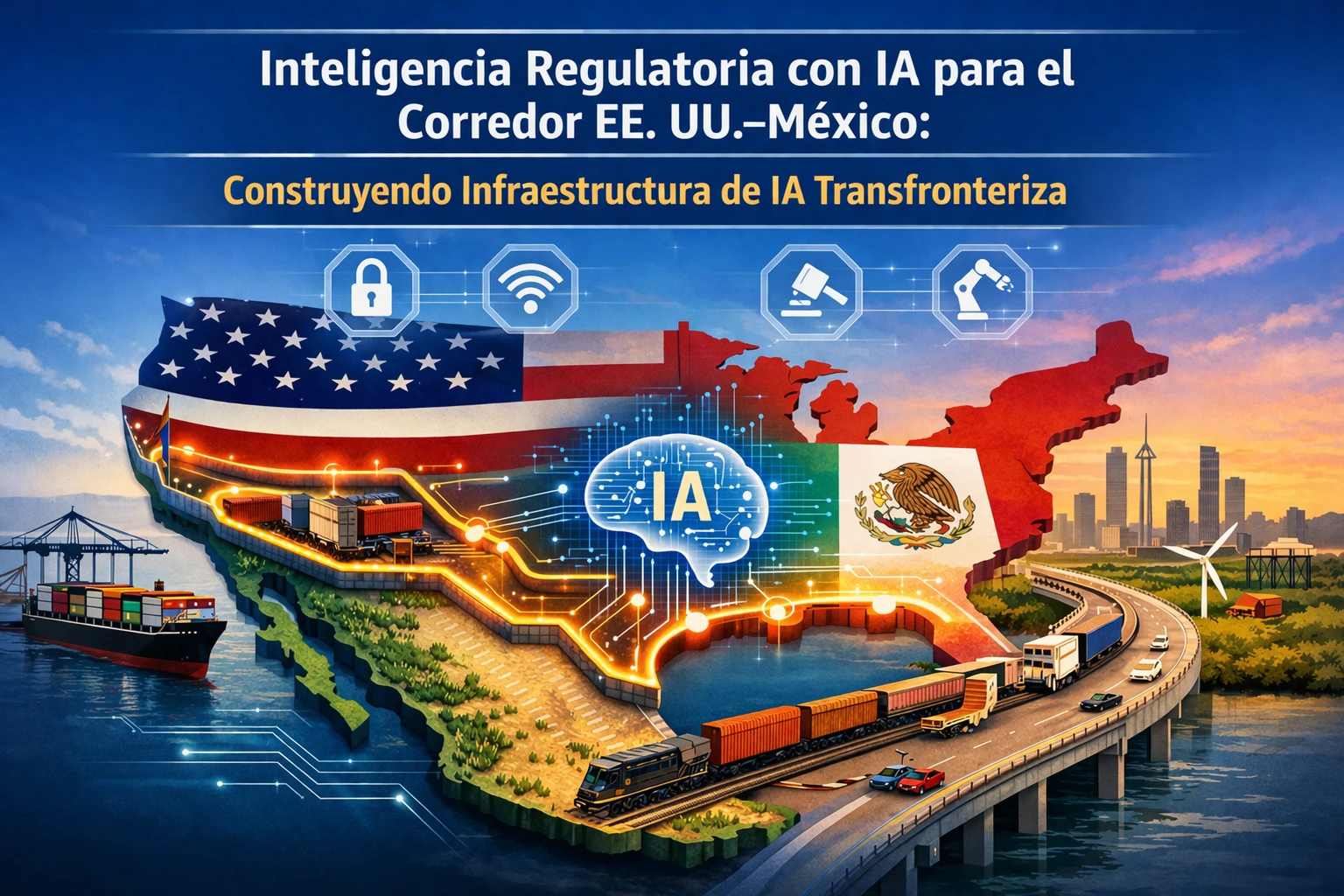
AI Regulatory Intelligence for the US–Mexico Corridor: Building Cross-Border AI Infrastructure
Introduction
Artificial intelligence is transforming how businesses access information. But when it comes to regulatory environments, compliance frameworks, and cross-border commerce, most AI tools still rely on fragmented sources and unstructured data.
For companies operating between the United States and Mexico, the challenge is even greater. Regulations, statutes, and institutional knowledge exist across multiple jurisdictions, languages, and legal systems.
As we began building AI systems for cross-border commerce and regulated industries, it became clear that general-purpose AI tools were not enough. The knowledge environment surrounding those models needed to be designed just as carefully as the models themselves.
This realization led Innoveto to begin developing what we call a Sovereign Intelligence Layer for the US–Mexico corridor.
AI regulatory intelligence refers to the structured organization of legal, statutory, and policy information into systems that allow artificial intelligence to reason over authoritative sources within specific jurisdictions.
How AI Infrastructure Is Transforming the US–Mexico Business Corridor
The transformation of cross-border business environments is increasingly being driven by advances in AI infrastructure and structured intelligence systems. As organizations scale across jurisdictions, the ability to access, interpret, and operationalize regulatory information in real time is becoming a critical competitive advantage. This shift is redefining how companies approach compliance, operations, and decision-making across the US–Mexico corridor.
The Problem: Regulatory Knowledge Is Fragmented
Businesses operating across borders face a constant challenge: locating reliable regulatory information across multiple jurisdictions.
Information is often scattered across:
- government publications
- legal frameworks
- regulatory agencies
- policy updates
- institutional documentation
This fragmentation makes it difficult for organizations to maintain consistent compliance across the US–Mexico corridor, where legal and operational requirements vary significantly by jurisdiction.
The Shift Toward Governed Intelligence
Large language models have become remarkably capable at analyzing complex legal and regulatory documents. New tools designed for legal professionals demonstrate how AI systems can now review contracts, interpret statutes, and extract meaning from large volumes of text.
However, the effectiveness of these systems increasingly depends on the knowledge environments surrounding the model.
In practice, AI systems perform best when they operate within curated, governed collections of authoritative sources rather than relying solely on unstructured internet content.
Governed intelligence layers organize information from trusted sources such as:
• statutory frameworks
• regulatory guidance
• policy publications
• institutional documentation
• cross-border commerce references
These environments allow AI systems to reason over reliable information while maintaining jurisdictional context.
AI System Architecture Matters
In modern AI systems, performance is shaped not only by the capabilities of the underlying model but also by the architecture surrounding it.
Retrieval frameworks, curated document environments, and domain-specific knowledge layers determine how effectively AI systems can reason over authoritative information.
For organizations operating in regulated environments or across jurisdictions, this architectural layer often determines whether AI outputs are reliable enough to support real operational decisions.
Why the US–Mexico Corridor Matters
The United States and Mexico represent one of the largest economic corridors in the world.
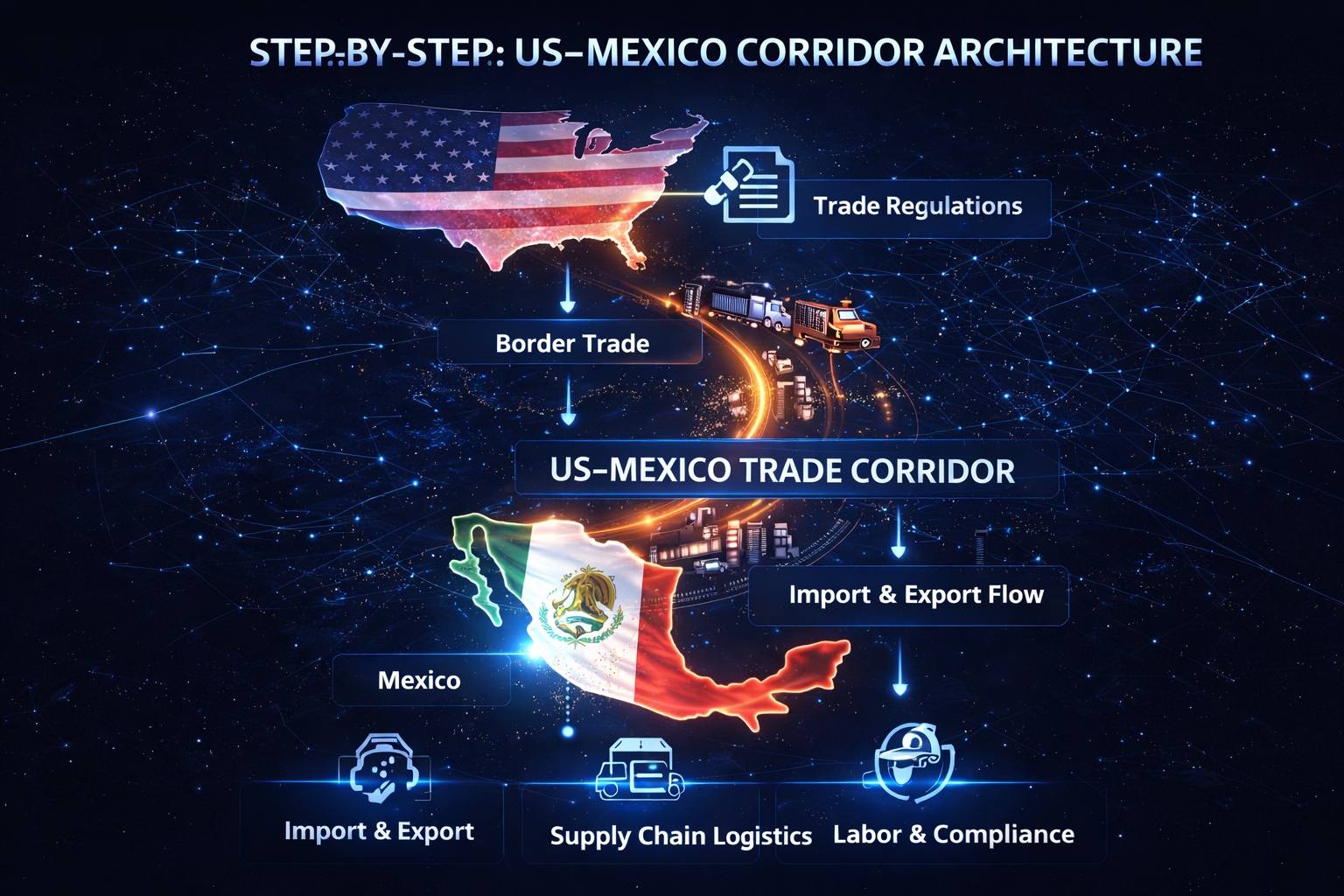
Companies operating across this corridor navigate:
- trade regulations
- import and export rules
- labor frameworks
- healthcare compliance
- federal and state statutes
- bilingual regulatory documentation
Despite the scale of economic activity between these countries, the knowledge infrastructure surrounding these systems remains highly fragmented.
This creates an opportunity for AI systems designed specifically for cross-border regulatory intelligence. As AI adoption accelerates, the US–Mexico corridor is emerging as a critical environment for the development of cross-border AI infrastructure and bilingual intelligence systems.
Introducing the Sovereign Intelligence Layer
Innoveto’s Sovereign Intelligence Layer organizes regulatory and statutory knowledge across the US–Mexico corridor into structured, AI-accessible environments.
Rather than relying solely on open web search, the system prioritizes curated authoritative sources.
The Sovereign Intelligence Layer is designed to complement modern AI models by providing a structured knowledge foundation within which those models can operate more reliably.
In applied environments, these intelligence layers can be paired with interface systems such as Ava™, which translate structured knowledge into intake, qualification, and operational workflows across digital channels.
This layer operates as part of Innoveto’s broader AI OS™ architecture, where structured intelligence environments, reasoning systems, and operational workflows are coordinated into unified infrastructure.
Responsible AI and Governance
As AI adoption expands, responsible system design becomes increasingly important.
Structured intelligence environments help support:
- transparency around source material
- traceability of AI outputs
- reduced reliance on unverified sources
- alignment with compliance workflows
These principles are central to Innoveto’s approach to AI system development.
The Road Ahead
Over the next several years, reliable AI systems will likely combine powerful language models with carefully governed knowledge environments built for specific domains.
In regulated industries and cross-border economic systems, these structured intelligence layers may become a foundational component of responsible AI deployment.
At Innoveto, we view this work as part of a broader effort to build practical AI infrastructure for complex economic environments. This includes systems such as our Search Intelligence framework, which helps organize, interpret, and operationalize structured knowledge across AI-driven environments.
Conclusion
The next phase of AI will not simply be defined by larger models or faster responses.
It will be defined by better knowledge systems.
By organizing regulatory and statutory intelligence across the US–Mexico corridor, Innoveto aims to help businesses navigate complexity with greater clarity and confidence.